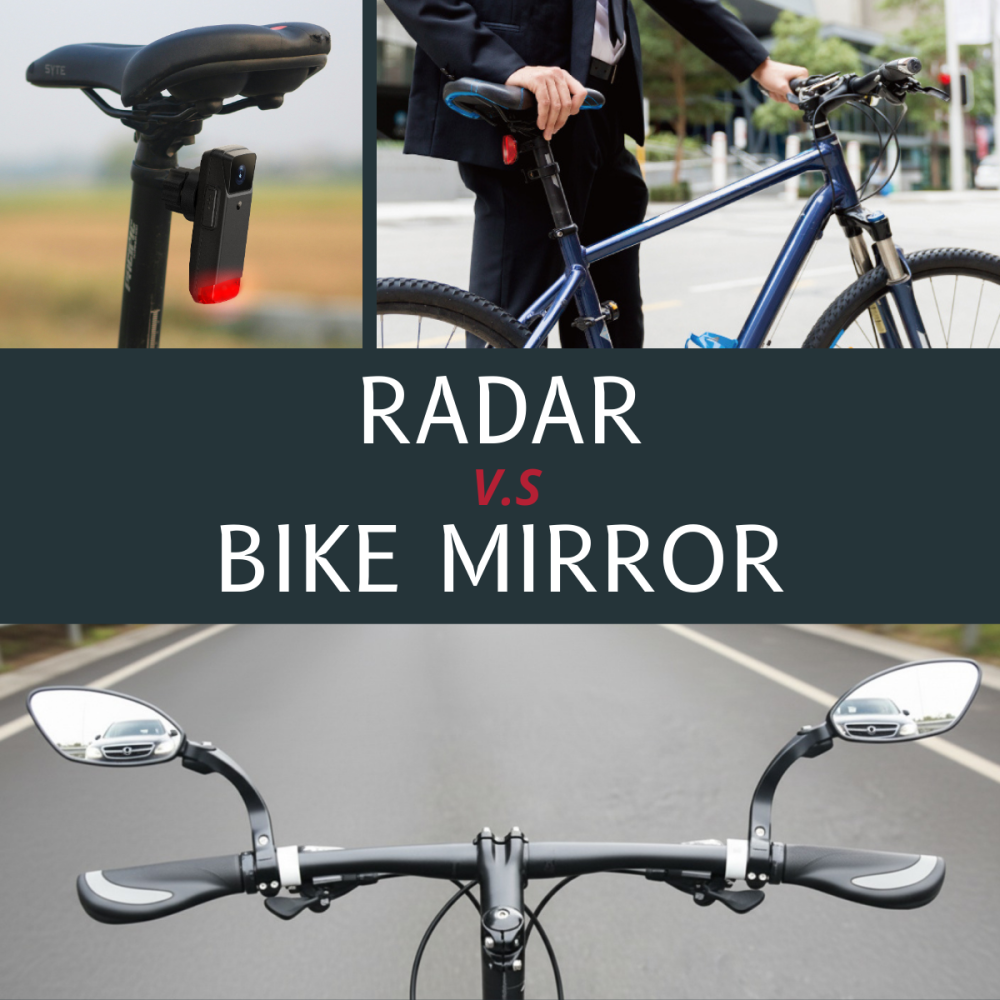



Rearview Mirror vs Smart E-Mirror with Radar
Mirrors rely on riders to keep checking behind them. Radar monitors approaching traffic and alerts in real time, so riders stay focused on the road ahead.
5/13/20263 min read


Bicycle Mirrors vs Radar: Which Provides Better Safety for Cyclists?
Cyclists face a common challenge every time they ride: staying aware of vehicles approaching from behind. Whether commuting in the city or riding on open roads, rear visibility plays a critical role in rider safety.
Traditionally, cyclists have relied on rearview mirrors to monitor traffic. Today, advanced bicycle radar systems offer a new approach by actively detecting and alerting riders to approaching vehicles.
So which solution provides better protection? Let's explore the differences.
1. Why Is Rear Awareness Important for Cyclists?
Many cycling accidents occur when riders are unaware of vehicles approaching from behind. Having reliable information about rear traffic can help cyclists make safer lane changes, turns, and road positioning decisions.
Improved rear awareness also increases rider confidence, especially in high-traffic environments.
2. How Do Bicycle Rearview Mirrors Work?
Bicycle mirrors provide a visual reflection of the road behind the rider. Mounted on handlebars, helmets, or bar ends, they allow cyclists to periodically check approaching traffic without turning their heads completely.
Benefits of Bicycle Mirrors
Affordable and widely available
No battery or charging required
Simple installation and operation
Suitable for casual riders and commuters
Limitations of Bicycle Mirrors
Limited field of view
Blind spots may still exist
Performance can be affected by vibration, rain, or low-light conditions
Riders must actively check the mirror to identify hazards
3. What Is a Bicycle Radar System?
A bicycle radar system uses millimeter-wave (mmWave) technology to detect vehicles approaching from behind. Instead of requiring riders to constantly look back, the radar continuously monitors traffic and provides alerts when vehicles are detected.
Many modern systems combine radar sensing with visual displays, cameras, or smart warning indicators.
4. How Does Radar Improve Cycling Safety?
Unlike mirrors, radar technology actively monitors the riding environment.
Key safety advantages include:
Continuous vehicle detection
Early warning of approaching traffic
Detection beyond a mirror's visible range
Improved awareness of potential blind spots
Real-time alerts through sound, visual indicators, or vibration
By reducing the need for frequent shoulder checks, riders can focus more attention on the road ahead.
5. Mirror vs Radar: What Is the Biggest Difference?
The primary difference comes down to passive versus active awareness.
Rearview Mirror
A mirror only provides information when the rider chooses to look at it.
Radar System
A radar system continuously scans for approaching vehicles and automatically alerts the rider when a potential risk is detected.
This proactive approach can be particularly valuable in busy urban environments and high-speed traffic situations.
6. Are Bicycle Mirrors Enough for Everyday Riding?
For many casual riders, mirrors can provide a basic level of rear visibility and remain a practical, low-cost safety tool.
However, as traffic density increases and riding environments become more complex, mirrors alone may not provide sufficient situational awareness.
7. Is Bicycle Radar Worth the Investment?
For cyclists who frequently ride on roads shared with motor vehicles, radar technology can offer significant safety and convenience benefits.
Riders often choose radar systems because they provide:
Greater confidence during rides
Improved awareness of approaching vehicles
Reduced reliance on constant visual checks
Enhanced protection during long-distance and high-traffic cycling
8. Which Solution Is Right for You?
The best choice depends on your riding style and safety priorities.
Choose a bicycle mirror if you want:
A simple and affordable solution
No battery maintenance
Basic rear visibility
Choose a bicycle radar system if you want:
Advanced vehicle detection
Automatic safety alerts
Enhanced situational awareness
Greater confidence in traffic
Some riders even combine both technologies to maximize rear visibility and safety.
The Future of Cycling Safety
As cycling technology continues to evolve, radar-based safety systems are becoming an increasingly important part of intelligent mobility. While mirrors remain a useful tool, active detection technologies offer a new level of awareness that can help cyclists ride more safely and confidently in today's traffic environment.